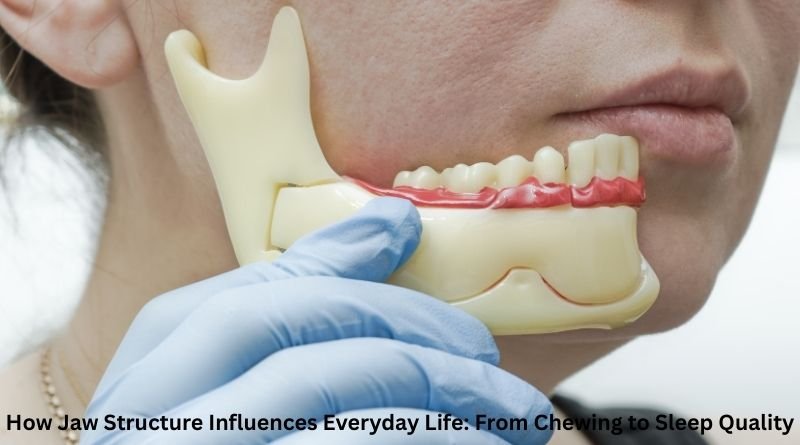

When most people think about the jaw, they picture chewing or smiling. But the jaw’s role in the body extends far beyond these common functions. The architecture of the jaw and its surrounding structures plays a critical part in how you breathe, how you manage stress, how your joints function, and even how you sleep.
Because the jaw interacts with muscles, joints, bones, and airway passages, problems in this complex system can lead to unexpected symptoms. Understanding these connections helps clarify why some conditions are more than just “dental issues,” and why in certain situations specialized Maxillofacial Surgery becomes part of restoring healthy function.
This article explores the lesser-known ways the jaw affects daily life and what can happen when things go off balance.
1) Chewing and Nutrition: More Than Just Biting
At first glance, chewing seems simple: you bring your teeth together and grind food. But efficient chewing depends on coordinated action between:
- jaw movement
- bite alignment
- muscle balance
- temporomandibular joint (TMJ) stability
If even one of these components malfunctions, chewing becomes inefficient. This may cause:
- quicker fatigue when eating
- aversion to tougher foods
- uneven tooth wear
- increased stress on certain muscles
- digestive discomfort (from poorly broken-down food)
These outcomes can affect nutrition and health more than most people realize.
2) Speech and Jaw Mechanics
The jaw doesn’t just chew. It also helps position the tongue and lips for speech.
Minor shifts in jaw alignment or joint movement limitations can change:
- tongue placement
- the ability to form certain sounds
- jaw range of motion
- bite pattern
Subtle alterations can affect speech clarity, especially in tasks requiring fine oral control—like singing, public speaking, or precise articulation.
Speech issues related to jaw mechanics are often misinterpreted as linguistic problems rather than biomechanical ones.
3) The Jaw–Neck Connection: Pain You Didn’t Expect
Many people with jaw problems complain of symptoms that don’t feel like jaw issues—such as:
- neck stiffness
- shoulder tension
- upper back discomfort
The reason lies in muscle chains. The muscles that control the jaw are connected to the neck and upper shoulder region. When the jaw is overactive, misaligned, or painful, the body recruits support muscles, creating tension patterns that travel down the neck and into the upper back.
What starts as a jaw problem can therefore become chronic pain far from the source.
4) Sleep Breathing: The Jaw’s Role in Airway Patency
One of the most misunderstood roles of the jaw is its influence on breathing during sleep.
The jaw and tongue position directly affect the space behind the tongue (retroglossal space). If the lower jaw sits too far back, this space might narrow, increasing the risk of airway collapse at night. When airway collapse occurs repeatedly, it can result in obstructive sleep apnea (OSA), which is much more than loud snoring.
Symptoms associated with this include:
- repeated nighttime awakenings
- daytime fatigue
- morning headaches
- cognitive fog
- increased cardiovascular strain
For some individuals with structural contributors to airway obstruction, addressing jaw positioning becomes part of airway management.
5) TMJ Disorders: More Than Clicking
When people hear “TMJ disorder,” they often think of benign clicking or popping. But the temporomandibular joint is one of the most complex joints in the human body, capable of gliding and hinging movement simultaneously.
When the disk within the joint becomes displaced, inflamed, or degenerative, it can lead to:
- pain during chewing
- jaw locking
- limited mouth opening
- changes in bite
- chronic muscle fatigue
As these symptoms worsen, they may interfere with almost every activity that involves the lower face.
6) How Structural Jaw Differences Lead to Functional Problems
Not all jaw structural differences are obvious. Many people live with minor skeletal imbalances for years without realizing it. However, these differences can become magnified over time as joints, muscles, and teeth compensate.
Some common structural contributors include:
- underdevelopment of the upper jaw
- retrusion of the lower jaw
- asymmetrical jaw growth
- imbalanced bite patterns
Even a few millimetres of misalignment can affect chewing, breathing, joint loading, and facial symmetry.
7) When Function Takes Priority Over Form
Facial correction and enhancement procedures are often portrayed as cosmetic in mainstream media. But when structural imbalance affects function—especially chewing, breathing, and joint health—the approach changes.
The key distinction is this:
- Cosmetic focus: primarily about appearance
- Functional focus: about restoring balance and performance
Functional corrections often require advanced planning, including 3D imaging, airway analysis, bite evaluation, and joint assessment. These steps ensure that changes are not just visible but also stable and long-lasting.
8) Life After Structural Treatment
It’s a misconception to think that structural correction only matters for acute symptoms. Many people who undergo functional alignment procedures describe improvements in:
- eating comfort
- sleep quality
- headache frequency
- neck and shoulder tension
- speech clarity
- overall endurance
These improvements are the result of restoring balance to a system that extends far beyond the jaw itself.
Final Thoughts: Look at Function First
The jaw is more than a hinge. It’s a pivotal structure that connects multiple systems in the body. When it functions well, most people barely think about it. When it doesn’t, the effects ripple into unexpected areas.
Understanding the jaw’s broader role highlights why structural and functional considerations matter—not only for symptom relief, but for everyday quality of life.
If you want a deeper understanding of how advanced anatomical and functional jaw treatments are approached in complex cases, including issues related to joint health, airway, and skeletal alignment, an experienced specialist in Maxillofacial Surgery can provide insights that go beyond common assumptions.